
Physician-guided support for sustainable weight and metabolic health.
TransformRX offers individualized weight-management protocols designed to support appetite regulation, blood-sugar control, visceral-fat reduction, metabolic function, and long-term body-composition goals. Depending on clinical appropriateness, a plan may include Semaglutide, Tirzepatide, Retatrutide, Tesamorelin, MOTS-C, or AOD-9604.
Schedule a Consultation
Weight management involves more than willpower alone.
Appetite signaling, insulin sensitivity, sleep, medications, hormones, stress, body composition, and metabolic health can all influence weight. A comprehensive evaluation helps identify which treatment pathway may be appropriate and how medication, nutrition, movement, and monitoring should work together.
Hunger & Craving Support
Semaglutide and Tirzepatide support appetite regulation and may help patients feel satisfied with smaller portions.
Blood-Sugar Control
GLP-1-based therapies support glycemic control and may improve insulin-related metabolic health.
Body-Composition Support
Tesamorelin, MOTS-C, and other selected therapies may support visceral fat, energy metabolism, and body-composition goals.
Care designed around your weight and metabolic goals.
Depending on your clinical evaluation, a personalized plan may focus on:
Appetite Regulation
Support for hunger, cravings, and portion control.
Blood-Sugar Support
Support for glucose control and metabolic health.
Weight Reduction
Support for clinically meaningful and sustainable weight loss.
Visceral-Fat Reduction
Support for excess deep abdominal fat and waist circumference.
Metabolic Energy
Support for mitochondrial function and energy balance.
Long-Term Health
Support for cardiovascular, metabolic, mobility, and quality-of-life goals.
Different therapies support different metabolic pathways.
GLP-1 and dual- or triple-receptor agonists primarily influence appetite and glucose regulation. Tesamorelin targets the growth-hormone pathway and visceral fat. MOTS-C is studied for mitochondrial metabolism and insulin sensitivity, while AOD-9604 is generally positioned as a fat-metabolism peptide.
Appetite & Satiety
Semaglutide and Tirzepatide act on incretin pathways involved in hunger, fullness, and blood-sugar regulation.
Multi-Receptor Metabolic Support
Retatrutide is an investigational triple agonist targeting GLP-1, GIP, and glucagon pathways.
Visceral Fat & Energy Metabolism
Tesamorelin supports visceral-fat reduction, while MOTS-C is studied for mitochondrial energy and insulin sensitivity.
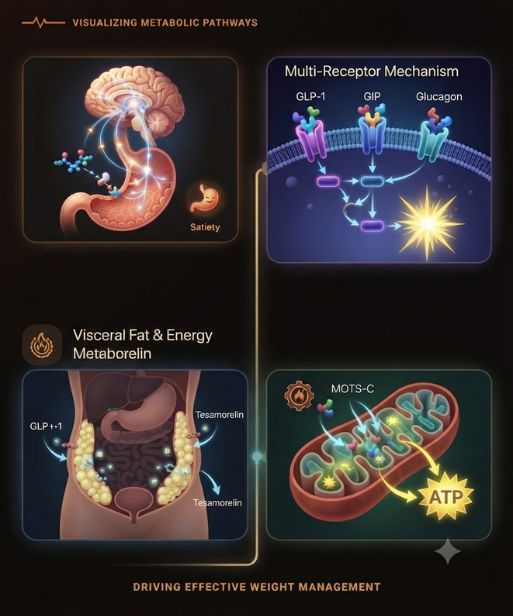
Explore the therapies in this support category.
These therapies are not interchangeable. Their indications, mechanisms, approval status, administration, and suitability differ. A TransformRX clinician determines which option, if any, may be appropriate.
Semaglutide
Semaglutide is an FDA-approved GLP-1 receptor agonist used for weight management and glycemic control. It supports appetite regulation, reduces cravings, and may improve blood-sugar control.
Tirzepatide
Tirzepatide is an FDA-approved dual GIP/GLP-1 receptor agonist used for significant weight loss and glucose control. Its dual-receptor activity may provide stronger appetite and metabolic effects for selected patients.
Retatrutide
Retatrutide is an investigational GLP-1/GIP/glucagon triple agonist being studied for substantial weight-loss potential and broader metabolic improvement.
Tesamorelin
Tesamorelin is a synthetic GHRH analog that stimulates the pituitary gland to release growth hormone. It is primarily prescribed to reduce excess visceral abdominal fat while maintaining natural hormonal feedback.
MOTS-C
MOTS-C is a mitochondrial-derived peptide being studied for its potential to support metabolic function, cellular energy production, insulin sensitivity, and stress adaptation.
AOD-9604
AOD-9604 is generally positioned in wellness settings as a peptide focused on supporting fat metabolism and healthy body composition.
Weight and metabolic changes may develop gradually.
These timelines are based on the TransformRX GLP-1 and Tesamorelin patient guides. Individual responses vary.
1–2 Weeks
Patients using GLP-1 therapy may notice improved appetite control and reduced cravings.
4–8 Weeks
Noticeable weight loss, reduced waist circumference, better glucose control, or early metabolic changes may develop.
8–12 Weeks
Tesamorelin users may begin to see measurable visceral-fat and waist-circumference reductions.
3–6+ Months
Continued weight reduction, more stable metabolic changes, improved mobility, and broader health benefits may emerge.
Matching the option to the weight-management goal.
This comparison is educational only. Final selection depends on your medical history, weight-related conditions, laboratory findings, contraindications, goals, and clinician assessment.
| Goal | Therapies Commonly Considered | Primary Area of Support |
|---|---|---|
| Appetite & Craving Control | Semaglutide, Tirzepatide | Satiety, hunger regulation, glucose control |
| Significant Weight Reduction | Semaglutide, Tirzepatide | Incretin signaling and sustained weight management |
| Investigational Multi-Receptor Support | Retatrutide | GLP-1, GIP, and glucagon pathways |
| Visceral Abdominal Fat | Tesamorelin | GH/IGF-1 signaling, lipolysis, waist reduction |
| Metabolic Energy & Insulin Sensitivity | MOTS-C | Mitochondrial signaling and metabolic adaptation |
| Fat-Metabolism Support | AOD-9604 | Body-composition and fat-metabolism protocols |
Your weight-management plan is built through medical guidance.
Treatment begins with a review of weight history, metabolic health, current medications, previous approaches, body composition, nutrition, sleep, and realistic long-term goals.
1. Comprehensive Consultation
Review weight history, medical conditions, medications, prior treatments, and goals.
2. Labs & Body Composition
Baseline laboratory testing and advanced body-composition analysis may be performed.
3. Personalized Protocol
Your clinician selects the appropriate therapy, starting dose, titration plan, and support strategy.
4. Ongoing Monitoring
Weight, body composition, appetite, side effects, labs, and long-term progress are reassessed.
Physician supervision is essential.
Weight-management medications and peptides differ significantly in approval status, evidence, contraindications, and monitoring needs. Retatrutide remains investigational, and several peptide options may be compounded or used off-label. Clinical decisions should include appropriate screening, informed consent, dose titration, and follow-up.
GI side effects are common with GLP-1 therapy: Nausea, vomiting, diarrhea, constipation, reduced appetite, bloating, and fatigue may occur.
Serious symptoms require prompt care: Persistent abdominal pain, severe vomiting, rapid heartbeat, or allergic symptoms should be medically evaluated.
No self-adjustment: Dose escalation, missed-dose decisions, and medication changes should follow clinician instructions.
Common questions, clearly answered.
Begin with a thoughtful weight-management evaluation.
Schedule Your Consultation
Meet with the TransformRX team to discuss weight history, metabolic health, medications, previous treatment, and realistic long-term goals.
Prepare for Your Visit
Bring a current medication and supplement list, recent laboratory results, and information about prior diets, medications, side effects, and weight changes.
Build lasting progress with a plan created around you.
Schedule a consultation to explore physician-guided options for appetite regulation, metabolic health, visceral-fat reduction, and sustainable body composition.
Schedule a ConsultationImportant Clinical Notice
The information on this page is for education only and is not a diagnosis, weight-loss guarantee, or treatment recommendation. Retatrutide is investigational, and several therapies discussed may be compounded or used off-label. Availability and eligibility are determined through physician evaluation, informed consent, and ongoing monitoring.