
Physician-guided support for strength, recovery, and body composition.
TransformRX offers individualized peptide protocols designed to support muscle recovery, lean-mass development, sleep, tissue repair, exercise performance, and body composition. Depending on clinical appropriateness, a plan may include CJC-1295/Ipamorelin, Sermorelin, Tesamorelin, IGF-1 LR3, BPC-157, or TB-500/TB-4.
Schedule a Consultation
Muscle growth depends on training, recovery, hormones, and tissue health.
Lean-mass development and recovery are influenced by resistance training, protein intake, sleep, hormones, age, injury history, and metabolic health. Peptide therapy may support selected pathways, but it does not replace progressive training, nutrition, rehabilitation, or appropriate medical care.
Lean-Mass Support
CJC-1295/Ipamorelin, Sermorelin, and IGF-1 LR3 are used in protocols focused on muscle development and anabolic support.
Sleep & GH Signaling
Growth-hormone-releasing peptides may support deeper sleep, exercise recovery, collagen synthesis, and body composition.
Soft-Tissue Healing
BPC-157 and TB-500/TB-4 are associated with tendon, ligament, muscle, and wound-recovery support.
Care designed around your performance and recovery goals.
Depending on your clinical evaluation, a personalized plan may focus on:
Lean-Mass Development
Support for muscle growth, tone, and strength-focused goals.
Exercise Recovery
Support for recovery after training and improved readiness between sessions.
Restorative Sleep
Support for deeper sleep and overnight recovery.
Tendon & Ligament Repair
Support for connective-tissue recovery and injury rehabilitation.
Body Composition
Support for visceral-fat reduction, fat metabolism, and lean-mass preservation.
Performance Support
Support for training adaptation, strength, and functional recovery.
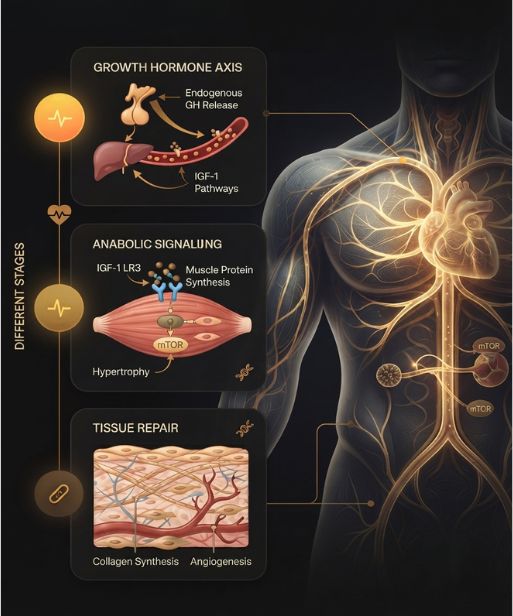
Different therapies support different stages of growth and recovery.
Growth-hormone-releasing peptides support the body's own GH and IGF-1 signaling. IGF-1 LR3 is positioned as a longer-acting anabolic growth factor analog, while BPC-157 and TB-500/TB-4 focus more directly on tissue repair and recovery.
Growth-Hormone Axis
CJC-1295/Ipamorelin, Sermorelin, and Tesamorelin support endogenous GH and IGF-1 pathways.
Anabolic Signaling
IGF-1 LR3 is a long-acting insulin-like growth factor analog used in performance and muscle-building protocols.
Tissue Repair
BPC-157 and TB-500/TB-4 support collagen signaling, angiogenesis, cell migration, and musculoskeletal recovery.
Explore the therapies in this support category.
These therapies are not interchangeable. Their intended use, administration, regulatory status, and suitability differ. A TransformRX clinician determines which option, if any, may be appropriate.
CJC-1295 / Ipamorelin
CJC-1295 and Ipamorelin are synthetic growth-hormone secretagogues that promote the body's own growth-hormone release. Growth hormone supports cellular replication, collagen synthesis, and production of IGF-1, which is involved in muscle growth and fat metabolism.
Sermorelin
Sermorelin is a growth-hormone-releasing hormone analog that stimulates the pituitary gland to increase natural growth-hormone production. It is used in protocols focused on sleep, recovery, lean-mass support, vitality, and healthy aging.
Tesamorelin
Tesamorelin is a synthetic GHRH analog that stimulates the pituitary gland to release growth hormone. It is primarily prescribed to reduce excess visceral abdominal fat while maintaining natural hormonal feedback.
IGF-1 LR3
IGF-1 LR3 is a long-acting insulin-like growth factor analog used in performance and muscle-building protocols. It is associated with anabolic signaling and recovery support.
BPC-157
BPC-157 is a gastric-derived peptide associated with tissue repair and anti-inflammatory signaling. It is used in protocols focused on tendon and ligament injury, gut support, pain modulation, and recovery.
TB-500 / TB-4
TB-500 is a synthetic fragment related to Thymosin Beta-4. It is involved in tissue remodeling and is used in protocols focused on wound healing, angiogenesis, cell migration, and tendon recovery.
Performance and recovery changes may develop gradually.
These timelines are based on the TransformRX guides for CJC-1295/Ipamorelin, Sermorelin, Tesamorelin, and BPC-157/TB-500. Individual responses vary.
1–4 Weeks
Deeper sleep, improved energy, better mood, reduced soreness, and early recovery changes may begin.
4–8 Weeks
Patients may notice better muscle tone, exercise recovery, mobility, flexibility, and early metabolic changes.
8–12 Weeks
More visible muscle definition, strength, visceral-fat reduction, and improved body composition may develop.
3–6+ Months
Longer-term goals may include more substantial muscle gains, stabilized body composition, tissue remodeling, and improved joint health.
Matching the option to the performance goal.
This comparison is educational only. Final selection depends on your medical history, training goals, laboratory findings, contraindications, and clinician assessment.
| Goal | Therapies Commonly Considered | Primary Area of Support |
|---|---|---|
| Lean-Mass Development | CJC-1295/Ipamorelin, Sermorelin, IGF-1 LR3 | GH/IGF-1 signaling and anabolic support |
| Deep Sleep & Recovery | CJC-1295/Ipamorelin, Sermorelin | Nighttime GH release and restorative recovery |
| Visceral-Fat Reduction | Tesamorelin | GH/IGF-1 signaling, lipolysis, and body composition |
| Tendon & Ligament Recovery | BPC-157, TB-500/TB-4 | Collagen signaling, angiogenesis, cell migration, and remodeling |
| Overall Performance Support | CJC-1295/Ipamorelin, IGF-1 LR3, BPC-157, TB-500/TB-4 | Growth, recovery, tissue repair, and training adaptation |
Your performance plan is built through medical guidance.
Muscle loss, poor recovery, fatigue, and stalled performance may be influenced by sleep, hormone status, nutrition, injury, training load, medications, and metabolic health. Treatment begins with evaluation rather than automatic peptide selection.
1. Performance Consultation
Review training history, recovery, injuries, sleep, nutrition, medications, and goals.
2. Clinical Review
Relevant laboratory testing, hormone status, body composition, imaging, and contraindications may be reviewed.
3. Personalized Protocol
Your clinician selects an appropriate therapy, route, schedule, and monitoring strategy.
4. Ongoing Monitoring
Strength, recovery, body composition, pain, tolerance, and laboratory markers are reassessed over time.
Physician supervision is essential.
Many peptides discussed on this page are investigational, compounded, or used off-label. Long-term safety and efficacy data may be limited. Clinical decisions should include appropriate screening, informed consent, medication review, and ongoing monitoring.
Growth-factor therapies require careful screening: Active cancer, untreated hypothyroidism, pregnancy, breastfeeding, glucose concerns, and other conditions may affect eligibility.
Do not self-adjust treatment: Dose, frequency, route, and duration should only be changed by the prescribing clinician.
Peptides do not replace rehabilitation: Significant injuries may still require imaging, physical therapy, orthopedic care, or surgery.
Common questions, clearly answered.
Begin with a thoughtful performance evaluation.
Schedule Your Consultation
Meet with the TransformRX team to discuss muscle-growth goals, recovery, injuries, sleep, training history, and whether a physician-guided protocol may be appropriate.
Prepare for Your Visit
Bring a current medication and supplement list, recent laboratory results, training details, relevant imaging, and information about prior injuries or recovery limitations.
Build strength with a plan created around you.
Schedule a consultation to explore physician-guided options for muscle growth, exercise recovery, tissue repair, sleep, and body composition.
Schedule a ConsultationImportant Clinical Notice
The information on this page is for education only and is not a diagnosis, performance guarantee, or treatment recommendation. Many therapies discussed here are investigational, compounded, or used off-label and may not be FDA-approved for the goals described. Availability and eligibility are determined through physician evaluation, informed consent, and ongoing monitoring.